Source Fast Installation Expandable Container House for Villa, Office, Apartment
Explore 30 listings for the fast installation expandable container house, featuring steel structures, IP65 waterproofing, and earthquake resistance. Buyers can compare specifications like 20FT models, off-grid solar systems, and customizable layouts for emergency relief, tourism, or commercial use.
Key considerations
Products List




Comprehensive Sourcing Guide
Strategic Sourcing Guide for Fast Installation Expandable Container Houses
The global demand for rapid-deployment housing solutions has elevated the fast installation expandable container house to a critical asset in modern procurement strategies. These structures bridge the gap between traditional permanent construction and temporary shelters, offering a unique blend of speed, durability, and adaptability. For B2B buyers, understanding the specific technical parameters, compliance requirements, and operational capabilities of these units is essential to mitigate risk and ensure project success. This guide synthesizes observed market data and technical specifications to provide a disciplined framework for sourcing these modular assets.
Technical Architecture and Structural Integrity
The foundation of any reliable expandable container house lies in its structural engineering and material composition. The primary frame is typically constructed from Q235 hot-dip galvanized steel, a specification that ensures robust resistance to corrosion and structural fatigue over extended periods. This material choice is critical for units intended for harsh environments, as the galvanized coating provides a protective barrier against moisture and oxidation. The structural design often supports a floor load-bearing capacity of at least 150kg per square meter, which accommodates standard office furniture, residential appliances, and light commercial equipment without compromising safety.
Dimensions and expandability are defining characteristics of this product category. While standard configurations often align with 20-foot, 30-foot, or 40-foot shipping container modules, the expandable nature allows for dynamic sizing. Specific observed models, such as the 20FT variant, can expand to dimensions of approximately 590cm in width, 630cm in length, and 248cm in height. This expansion capability transforms a compact transport unit into a spacious living or working environment, significantly increasing the usable area to roughly 37 square meters in its fully deployed state. The roof is generally fabricated from color steel sheets integrated with insulation layers, while the flooring options include fireproof MGO board or durable PVC finishes, balancing safety with aesthetic flexibility.
Performance Metrics and Environmental Resilience
Procurement decisions must prioritize performance metrics that guarantee safety and comfort under varying environmental conditions. The operational temperature range for these units is typically designed to withstand conditions from -20℃ to 50℃, ensuring viability in both cold and hot climates. A critical performance indicator is the seismic and wind resistance rating. High-confidence data indicates that these structures can withstand Grade 8 earthquakes and wind speeds ranging from 17.2m/s to 28.4m/s, classified as Grade 8-10 wind resistance. This level of resilience makes them suitable for deployment in disaster-prone regions or areas with severe weather patterns.
Waterproofing and thermal efficiency are equally vital. The units are engineered with a waterproof rating of IP65, achieved through full seam sealing and specialized joint designs that prevent water ingress. Thermal insulation is provided through wall panels with optional thicknesses of 50mm, 75mm, or 100mm, offering "good thermal insulation" that reduces energy consumption for heating and cooling. The electrical systems are pre-wired and often support dual voltage modes, including 220V for civilian use, with options for 110V or 380V customization. For off-grid applications, configurations may include a 48V DC system paired with 16kWh energy storage and 1200W solar panels, enhancing autonomy in remote locations.
Compliance, Certification, and Regulatory Standards
Navigating the regulatory landscape is a non-negotiable aspect of B2B procurement. Buyers must verify that suppliers possess valid international certifications that attest to the quality and safety of their manufacturing processes. The most common certifications observed in this sector include CE marking, which indicates conformity with health, safety, and environmental protection standards for products sold within the European Economic Area, and ISO9001, which validates the supplier's adherence to quality management systems. These certifications are not merely marketing tools but are essential for ensuring that the structural and electrical components meet rigorous international standards.
In addition to general certifications, specific product standards must be verified. The standard layout for a 20-foot unit typically includes two bedrooms, one living room, and one bathroom, though this can be customized. Buyers should confirm that the product standard aligns with the intended use, whether for emergency disaster relief, construction projects, or tourism accommodation. The design life of these units is often cited as 20+ years, a figure that should be supported by the manufacturer's warranty and material specifications. Verification of the "Standard Voltage" and "Electrical System" configurations against local grid requirements is also necessary to avoid costly retrofits upon delivery.
Cost Drivers and Total Cost of Ownership
The pricing for fast installation expandable container houses varies significantly based on customization, size, and feature sets. Observed market data indicates a price range between 990 USD and 13,000 USD, reflecting the diversity of configurations available. Several factors drive these costs. First, the material selection, particularly the thickness of the insulation and the grade of the steel, directly impacts the unit price. Second, the level of customization, such as specific interior finishes like customized wallpaper or partition walls, adds to the base cost. Third, the inclusion of off-grid capabilities, such as solar panels and battery storage systems, represents a substantial portion of the total expenditure.
Lead time is another critical cost driver. A standard lead time for these units is approximately three weeks, but this can fluctuate based on order volume and the complexity of customizations. The Minimum Order Quantity (MOQ) is generally low, ranging from 1 to 2 units, which allows for flexible procurement strategies for small-scale projects. However, buyers should consider the total cost of ownership, which includes transportation, installation, and long-term maintenance. The "Fast Installation" feature, utilizing bolt-connected and quick assembly methods, significantly reduces labor costs and project timelines compared to traditional construction, offering a strong return on investment despite the higher initial unit cost.
Typical Applications and Deployment Scenarios
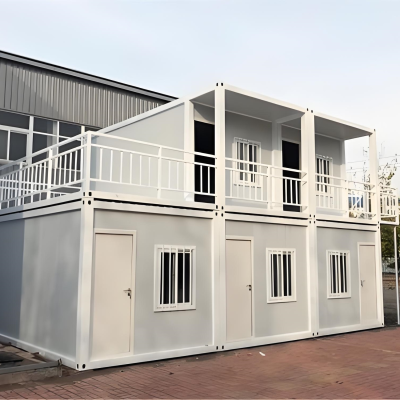
The versatility of expandable container houses makes them suitable for a wide array of applications. The primary uses include emergency disaster relief, where rapid deployment is critical for providing immediate shelter to displaced populations. In the construction sector, these units serve as temporary offices, dormitories, and site accommodation, offering a secure and comfortable environment for workers. The "Villa" application highlights their potential as permanent or semi-permanent residential structures, particularly in tourism and resort settings where aesthetic appeal and quick setup are valued.
Commercial and medical uses are also prominent. The units can be configured as temporary clinics, field hospitals, or commercial offices, leveraging their "Eco-Friendliness" and "Safe" attributes. The ability to combine units flexibly allows for the creation of larger complexes, such as dormitory blocks or multi-room offices. The "Easily Movable" feature ensures that these structures can be relocated as project needs change, providing a sustainable solution for temporary infrastructure. Whether for a short-term construction project or a long-term tourism venture, the adaptability of these units supports diverse operational requirements.
Supplier Evaluation and Quality Assurance
Selecting the right supplier requires a rigorous evaluation process that goes beyond price comparisons. Buyers should verify the supplier's origin, with China being a primary hub for this manufacturing sector, and assess their capacity to meet international standards. Key evaluation criteria include the supplier's track record in delivering units that meet the specified seismic and wind resistance ratings. It is essential to request detailed technical documentation that confirms the "Main Frame" material is indeed Q235 hot-dip galvanized steel and that the "Waterproof Grade" meets the IP65 standard.
Quality control measures should be established early in the procurement process. This includes verifying the "Installation Method" to ensure it aligns with the "Fast Installation" claim, utilizing bolt-connected systems that allow for quick assembly without specialized heavy machinery. Buyers should also inspect the "Interior Finish" options, ensuring that customized wallpaper and partition walls are available and meet quality expectations. The "Service Life" of 20+ years should be backed by a comprehensive warranty and clear maintenance guidelines. Finally, the "Packing" method, typically in containers, must be verified to ensure safe transport and protection of the units during transit.
Long-Term Procurement and Strategic Considerations
Sourcing expandable container houses is not a one-time transaction but a strategic decision with long-term implications. The "Eco-Friendliness" of these structures, combined with their "Thermal Insulation" and "Leak Proof" features, aligns with sustainability goals and reduces the carbon footprint of construction projects. The "Customization" availability allows organizations to tailor units to specific branding or functional needs, enhancing their utility over time. As the market evolves, buyers should remain vigilant regarding updates in standards and certifications, ensuring that their procurement strategy remains compliant with changing regulations.
The "Fast Installation" capability offers a competitive advantage in dynamic markets where time is a critical factor. By reducing the lead time from months to weeks, organizations can accelerate project delivery and realize revenue or operational benefits sooner. However, this speed must not come at the expense of quality. Buyers must maintain a balance between rapid deployment and rigorous quality assurance, ensuring that every unit meets the specified performance metrics. Ultimately, the successful procurement of fast installation expandable container houses depends on a clear understanding of technical specifications, a commitment to compliance, and a strategic approach to supplier relationships.
FAQs
What is the standard layout for a 20-foot expandable container house?
The standard layout typically includes two bedrooms, one living room, and one bathroom. This configuration can be customized to meet specific needs while maintaining the structural integrity of the 20-foot module.
How fast can these units be installed on site?
These units feature fast installation using bolt-connected and quick assembly methods. This approach significantly reduces labor time compared to traditional construction, allowing for rapid deployment in emergency or commercial scenarios.
What is the maximum wind resistance rating for this structure?
The structure supports a wind resistance class of Grade 8 to 10, handling speeds up to 28.4 meters per second. This ensures safety in areas prone to severe weather conditions and high wind events.
Can the units be used off-grid with solar power?
Yes, off-grid configurations are available with a 48V DC system and 16kWh energy storage. These units often include 1200W solar panels to provide autonomous power in remote locations without grid access.
Which certifications verify the quality and safety of these houses?
International certifications include CE and ISO9001, which validate compliance with safety and quality management standards. These credentials ensure the manufacturing processes meet rigorous international requirements for structural and electrical safety.
What is the expected service life of the expandable container house?
The design life is typically 20 years or more, ensuring long-term durability. This longevity is supported by the use of Q235 hot-dip galvanized steel frames and robust insulation materials.
How much weight can the floor support per square meter?
The floor load-bearing capacity is at least 150 kilograms per square meter. This specification accommodates standard office furniture, residential appliances, and light commercial equipment safely.